How it works
From stepping onto the kiosk to results on your phone, step by step.
-
1. Welcome and consent
A health worker greets you, explains the service in Kiswahili and records your name, mobile number, age and sex. You consent once to storing results and receiving messages; you can change this at any time.
-
2. The 90-second measurement
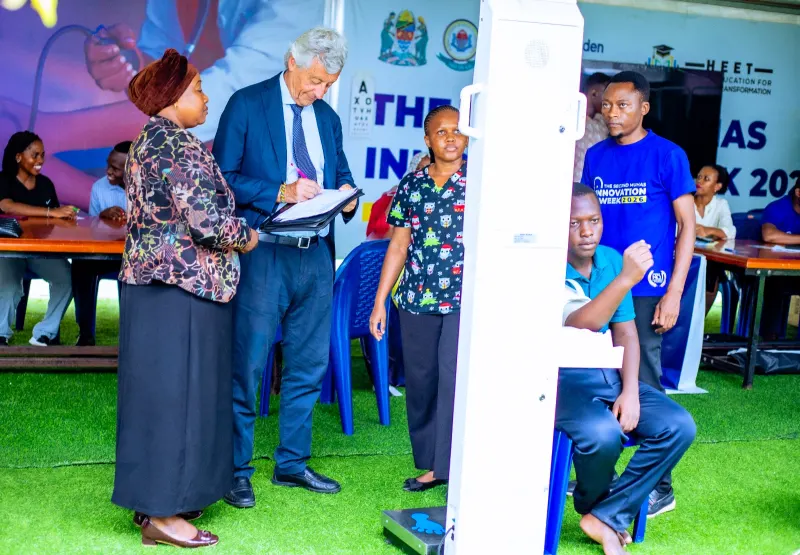
You stand on the kiosk. It captures height, weight, BMI, body fat, body water, muscle, visceral fat, blood pressure on both arms and pulse.
-
3. Rapid tests
Where and when the site offers them, the health worker can run finger-prick rapid tests for malaria (MRDT) and blood glucose using TMDA-approved kits.
-
4. Interpretation on the spot
The health worker walks through your results with a three-colour card: normal, watch, act. Anything needing action gets a printed and digital referral note.
-
5. Results on your phone
Within minutes you receive an SMS and a WhatsApp message with a link to your account, where every result is stored with its explanation.
What we measure and what it means
| Blood pressure | The force of blood in your arteries. Below 130/85 is normal; 140/90 and above is high and needs follow-up. |
|---|---|
| Pulse | Beats per minute. 60 to 100 is normal at rest. |
| BMI (weight for height) | 18.5 to 24.9 is normal; 25 and above is overweight; 30 and above is obesity. |
| Body fat | The share of your body that is fat. Healthy ranges differ for women and men and by age. |
| Visceral fat | Grade 1 to 9 is normal; 10 to 14 is high; 15 and above is very high and linked to diabetes and heart disease. |
| Body water | Women 45 to 60%; men 50 to 65%. A low value can mean dehydration. |
| Muscle, bone and protein | Shown in the detailed view of your results for people who want the full picture. |
What happens with an abnormal result
- Blood pressure 140/90 to 159/99: referral within 7 days plus lifestyle advice.
- Blood pressure 160/100 and above: referral within 48 hours. 180/110 and above, or symptoms such as headache or chest pain: same day, and the health worker calls the facility ahead.
- Obesity (BMI 30 and above) or visceral fat grade 15 and above: referral to a nutrition or NCD clinic.
- A positive rapid test: counselling and referral according to national guidelines.
How results reach your phone
You get an SMS with a short link. Opening it asks for a six-digit code sent by SMS. No password, no app to download. Any phone works.
What a kiosk screening is not
- It is not a medical diagnosis. It shows risk and tells you where to go.
- We do not sell medicines or provide treatment.
Frequently asked questions
- How much does it cost?
- TSh 2,000 per screening at public sites, in cash or mobile money (M-Pesa, Mixx by Yas, Airtel Money). Rapid tests are priced separately. Sponsored campaigns are free.
- How long does it take?
- The measurement itself is 90 seconds. With registration and the explanation, 5 to 7 minutes.
- What should I bring?
- Just your phone. No card or ID is needed.
- What about my privacy?
- Your results are stored in an account identified by your mobile number. Employers and sponsors only ever see aggregates, never an individual. We follow the Personal Data Protection Act, 2022.
- Can children be screened?
- The service is for adults. Under-18s are screened only with a parent and are never sent messages.
- What if I am pregnant?
- Blood pressure yes. Body composition is not interpreted during pregnancy.